
World's tallest building stays cool with innovative ice-storage system
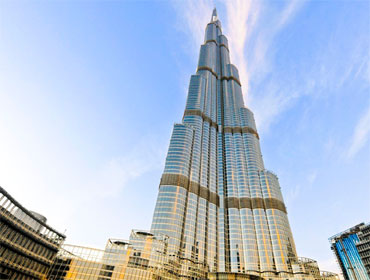
The world's tallest building, Burj Khalifa, stays cool in the scorching desert sun thanks to an innovative thermal ice-storage system and Alfa Laval plate heat exchangers.
DATE 2025-12-01A first for everything
There are not enough superlatives to describe the Burj Khalifa in Dubai, which, at 828 meters in height, is the tallest freestanding building in the world. The previous contender, Taipei 101, was 300 meters shorter The Burj Khalifa opened in January 2010 after six years of construction at a cost of around USD 1.5 billion.
The 160-floor building includes the first Giorgio Armani designed hotel, offices, sports, shopping, dining, residential and entertainment facilities as well as the world’s highest pool (on the 78th floor) and the world’s highest mosque (on the 158th floor). The tower was built by a joint venture consisting of JV of Samsung BESIX and Arabtec for local Dubai developer Emaar Properties.
Experience and quality
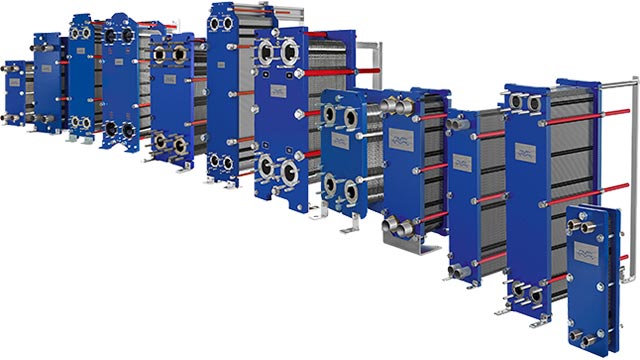
Alfa Laval heat exchangers were selected for the HVAC, plumbing and swimming pool applications after an elaborate evaluation process.
This process took into account Alfa Laval’s extensive experience in the district cooling market, the high material quality of its products, the company’s well-established Middle East presence, and its experience from applications in buildings of giant proportions.
Under the scorching desert sun, with outside temperatures often reaching 50ºC (122ºF), Burj Khalifa requires massive air conditioning capacity. For this purpose, the complex has its own district cooling plant.
Ice-storage saves energy and space
The cooling system includes an innovative solution based on a thermal ice-storage facility that produces tons of ice slurry during off-peak hours (at night). Using Alfa Laval plate heat exchangers, the ice slurry, built up in a tank, store the cooling energy that is later released, through the pipelines, to the entire indoor air conditioning and tap water systems.
Apart from giving substantial energy savings, the ice storage solution also requires only a fraction of the space needed by conventional cooling equipment. In the case of the huge Burj Khalifa, this is a major consideration. The ice is used as adjunct during peak load hours and also provides backup security in the event of a daytime chiller failure.
The customer
Emaar properties, United Arab Emirates
The challenge
- HVAC, plumbing and swimming pool applications in the world's largest building
- In a large scale system, even small energy losses along the distribution chain generates heavy annual costs and must therefore be kept at a minimum.
Solution
- The cooling system includes an innovative solution based on a thermal ice-storage facility that produces tons of ice slurry during off-peak hours (at night).
- Using Alfa Laval plate heat exchangers, the ice slurry, built up in a tank, store the cooling energy that is later released, through the pipelines, to the entire indoor air conditioning and tap water systems.
- Apart from giving substantial energy savings, the ice storage solution requires only a fraction of the space needed by conventional cooling equipment.